Second FORSAID annual consortium meeting reviews progress and looks ahead to the project's second half
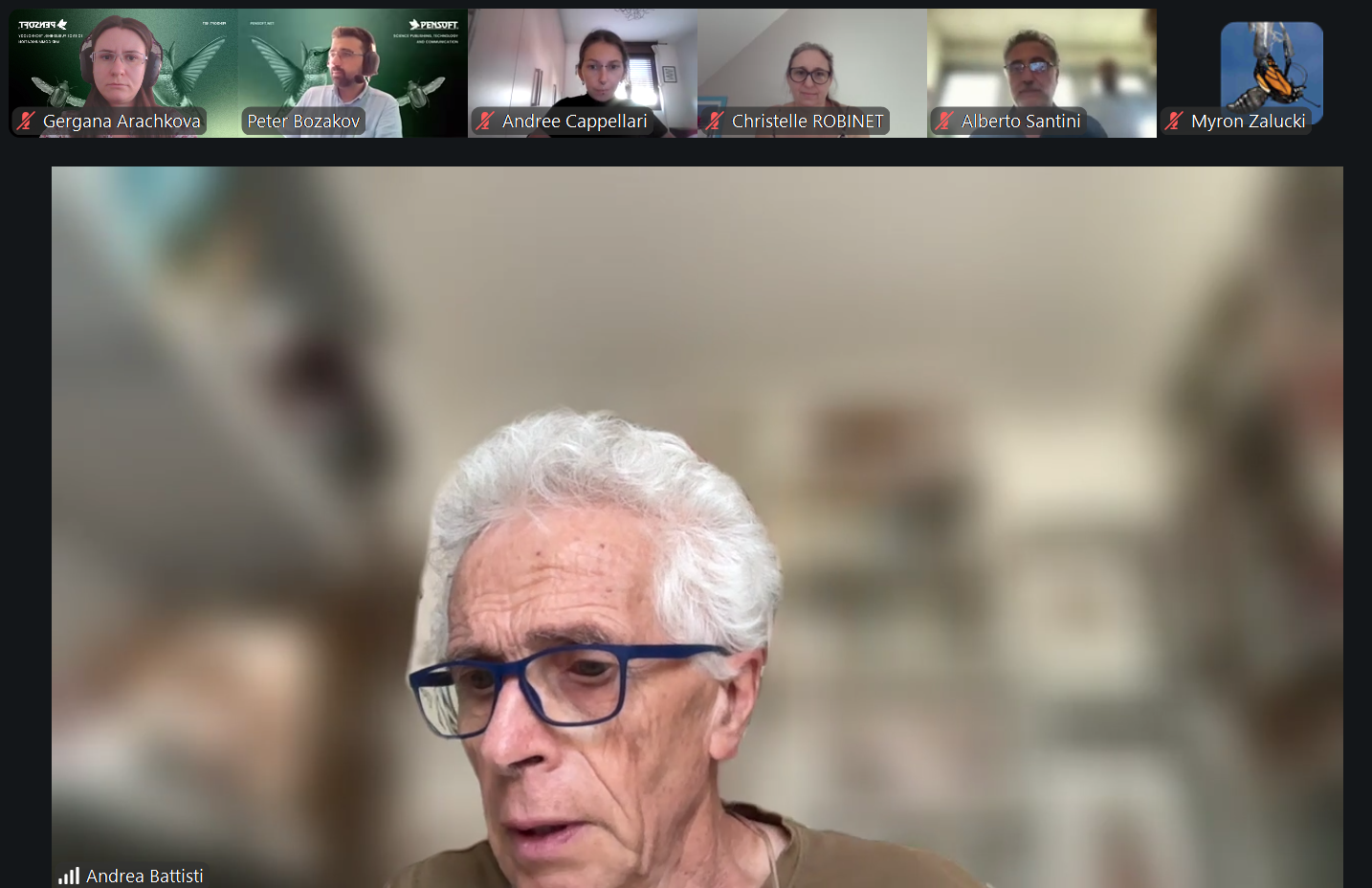
On 14 and 15 September 2026, the FORSAID consortium gathered online for its second annual meeting. Two years after the project's launch, the event evaluated how the implementation of its underlying vision is proceeding in preparation for the final 18 months of the initiative. Representatives from all 17 partner organisations took part, joined by the members of the FORSAID Advisory Board and policy officers from the European Commission.
This time around, the agenda followed a new format. Each session set out to show the links between FORSAID's work packages and the technologies developed within them, using specific target species as common ground. In doing so, the programme aimed to spark discussions on collaboration within the consortium and beyond.
More specifically, day one opened with a welcome from the coordination team at the University of Padua (UNIPD). Gergana Arachkova and Peter Bozakov (Pensoft Publishers) then followed with an overview of the project's communication, dissemination and exploitation activities.
With outreach covered, the agenda moved on to the first of four case studies across work packages, a showcase centred on the pine wood nematode (Bursaphelenchus xylophilus). Hervé Jactel and Christelle Robinet (INRAE) presented results on detection at stand level and in plant seedlings, environmental DNA detection and AI identification of adult Monochamus longhorn beetles, the insects responsible for spreading the nematode.
Alberto Santini and Alessia Pepori (CNR) subsequently moved the discussion to the canker stain of plane trees, a disease caused by the fungus Ceratocystis platani. Their presentation also covered detection at stand level and in plant seedlings, as well as environmental DNA methods. On 15 September, proceedings resumed with Benoît de Guerry (IEFC) and his presentation on FORSAID's deployment strategy with practitioners, including the management of the Committee of Stakeholders and the results of the project's demonstration activities.
Next on the agenda was the European spruce bark beetle (Ips typographus). Davide Nardi (UNIPD) shared results on satellite remote sensing, smart traps and cost effectiveness in the context of this pest species’ management. He also covered how AI identifies both native and introduced bark and ambrosia beetles.
Manuela Branco (CEF) carried the meeting forward with a presentation on the pine processionary moth (Thaumetopoea pityocampa) that covered host plant mapping, satellite remote sensing, smart traps and cost effectiveness.
Rounding off the case studies, Maarten de Groot (SFI) addressed citizen science approaches, with a specific focus on the target species discussed over the two days. Ultimately, the second annual meeting offered a clear overview of where FORSAID stands at its halfway point, a development further bolstered by the feedback received from the Advisory Board on the basis of proceedings. The discussions also pointed to new opportunities for collaboration as the project enters its second half.